

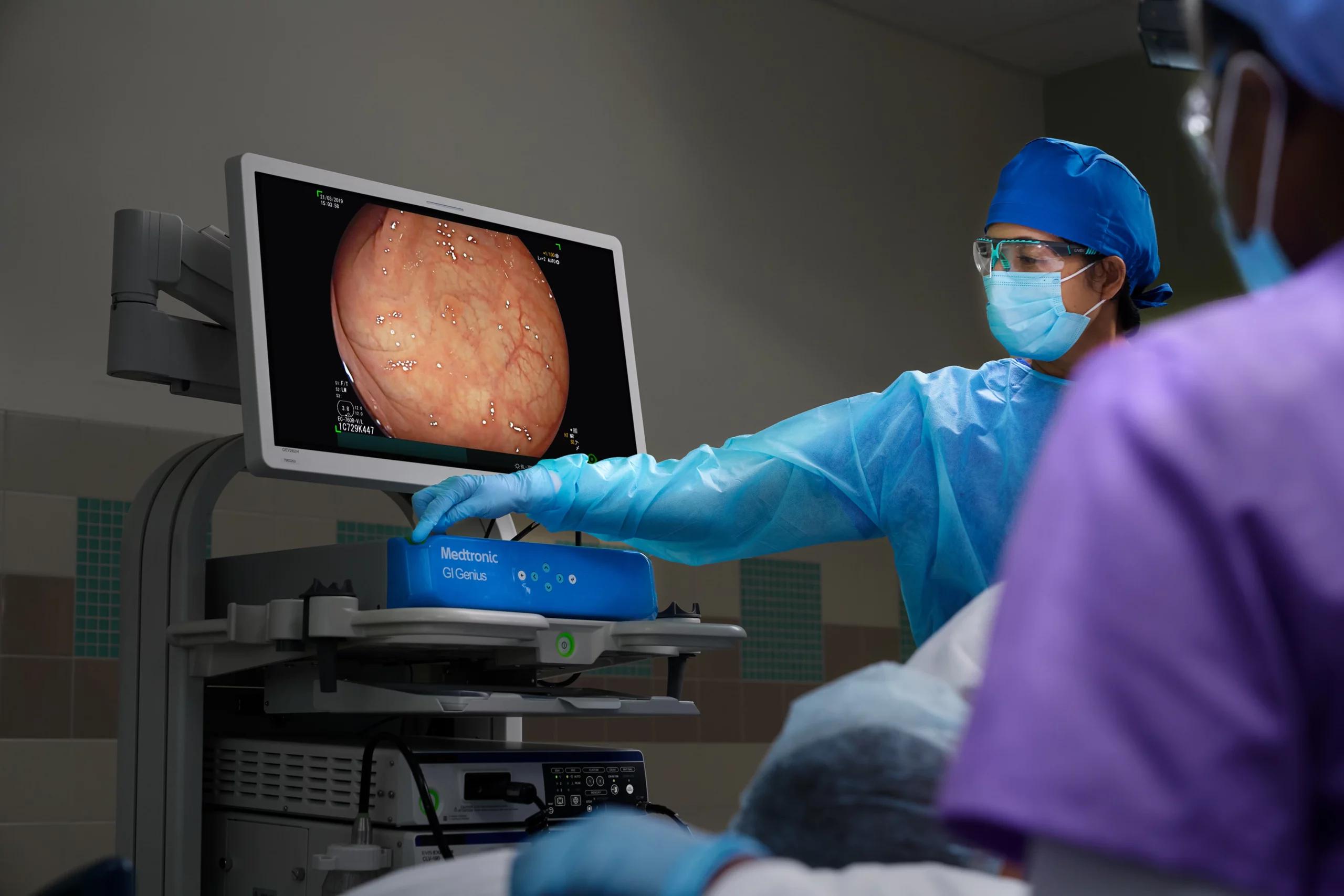
EndoSight AI Driving Real-Time Polyp Detection Innovation
On the announcement of its latest innovation, EndoSight AI introduced a deep learning architecture that detects and segments gastrointestinal polyps in real time during endoscopic procedures. This advanced system marks a major step in medical imaging, and it aims to improve diagnostic accuracy and patient outcomes. Moreover, it enables clearer visualization and faster identification of abnormalities, thereby addressing a key challenge in endoscopic care.
EndoSight AI Transforming Imaging Precision
The EndoSight AI system uses advanced machine learning algorithms to analyze endoscopic video streams with high accuracy. In addition, it detects subtle polyp structures that clinicians might miss during routine exams. As a result, the system highlights and outlines polyps clearly, helping clinicians make quicker and more confident decisions.
Furthermore, the technology delivers real-time analysis during procedures. Clinicians receive instant visual feedback, and they can respond immediately to abnormalities. Consequently, this reduces interpretation delays and improves workflow efficiency. At the same time, it lowers cognitive strain, allowing healthcare professionals to focus more on patient care.
The architecture also balances speed and accuracy effectively. Therefore, it performs reliably even in complex scenarios. Because of this, it becomes a valuable addition to modern endoscopic practices that aim to adopt AI-driven tools.
EndoSight AI Enhancing Clinical Outcomes
EndoSight AI plays an important role in colorectal cancer prevention. Since polyps often act as early warning signs, early detection becomes critical. Thus, this system increases the chances of identifying such precursors at the right time and supports better treatment outcomes.
However, traditional endoscopy often misses small or hidden polyps. In contrast, this technology reduces that risk significantly. It supports clinicians with intelligent detection, and therefore it improves diagnostic confidence. Additionally, it helps standardize care across different healthcare settings.
The system also improves consistency during procedures. For example, detection rates often vary between clinicians. With AI support, this variation decreases, and results become more reliable. Ultimately, patients benefit from a more accurate and consistent diagnostic process.
Collaborative Development and Validation
Experts in artificial intelligence and gastroenterology worked together to develop this system. As a result, the technology meets real clinical needs. Moreover, the design focuses on usability and practical application in healthcare environments.
Clinical partners have already tested the system in controlled settings. Notably, they reported strong performance and ease of use. Their feedback continues to guide improvements and refinements. Meanwhile, developers use these insights to enhance system capabilities.
In addition, ongoing validation efforts aim to strengthen confidence in the system. Researchers continue to collect data across different scenarios. Therefore, these efforts ensure high standards of safety and performance.
Advancing the Future of Endoscopy
This innovation signals a shift toward data-driven endoscopic procedures. As AI tools gain importance, healthcare providers increasingly rely on them. In this context, EndoSight AI stands at the forefront of this transformation.
The system integrates smoothly into existing workflows, and it offers a scalable solution for healthcare providers. Consequently, as adoption increases, it may set new standards for accuracy and efficiency.
Looking ahead, future developments may expand its capabilities beyond polyp detection. For instance, the technology could address a wider range of gastrointestinal conditions. Thus, it aligns with the global goal of improving early diagnosis and patient care.
Overall, EndoSight AI continues to push boundaries in medical technology. By focusing on precision and efficiency, it supports better outcomes. Therefore, it represents a meaningful step toward smarter and more reliable endoscopic diagnostics.